Showing posts sorted by date for query ducey. Sort by relevance Show all posts

Thursday, June 7, 2012

(part 278) IT WAS THE COVER NOT THE MUSIC


The album, Songs Of Protest And Anti-Protest, was the lynch-pin for the entire deal with Mira/Surrey's expansion into Europe in 1965, and here's why. This is something no one understands, and a subject I tried to explain to Steve Stanley on more than one occasion with little success. The Europeans wanted the album cover with Brian Jones picture on it for their market. They knew it would sell on sight. Surrey was created as a budget label that would sell records without promoting them in the usual way. It was a rack job operation. That means that the records would literally be sold on visual interest of shoppers from metal racks at grocery, drug, and variety stores, for discount prices. The Europeans were convinced that the Songs Of Protest cover was perfect for this kind of business, so they wanted it. They weren't as interested in what was in it musically, Ducey's version or mine, they were in love with the album jacket's art work and the picture of Brian Jones.


The necessity for Mira/Surrey, because the Ducey version could not be used, was to find someone to write and record ten new songs to the titles already printed on the album jacket. Surrey wasn't trying to make a great album at that point, they were trying save that cover because of it's importance to their overall deal with Europe. Like it or not, the music was a secondary point back then, and merely a vehicle to preserve the use of the album jacket. Mira/Surrey's hope was that it would be halfway decent musically and good enough to serve it's greater purpose. No one knew initially that the album was going to turn out as good as it did, that was a bonus.

The Ducey version was kept from being released because of contract problems with Chris Ducey. When my version, the Chris Lucey version, was completed, the problem with contracts came up again. I refused to sign the contract that was presented to me because I didn't know what it actually said. I asked for legal representation before I would sign it, which was denied me. Randy Wood got so pissed off, because of this, that he threw me against a wall and demanded that I sign the contract, which I again refused to do until I got a third party to tell me what it said. In a decision, which can only be deemed as illegal, Mira/Surrey released the album anyway to protect their own business interests in Europe. This was, and still is, the legal status of the Chris Lucey version of Songs Of Protest. Like the Ducey version before it, the Lucey version should not have been released until the contractual problems were sorted out. The difference being that Ducey had people who made sure of this, while I a twenty-year-old kid did not.


None of the legal problems with the album were ever dealt with, and they have always existed. They were just unknown, outside of a few people. Chiapetta assumed, along with everybody else, that I was dead, so she sold the master to Ace thinking no one would ever know the truth, or care that I had been harmed. The problem was that I wasn't dead, I was just missing. It was because Steve Stanley called me in 2003 that I found out about the album being released on Rev-Ola, a company I'd never even heard of. Had Steve not called me I very well may never have known about this at all. I wasn't keeping up with the music business, so it was his call that alerted me to it and brought me out of seclusion. And over time it was Steve Stanley who gave me all the information I didn't have. I knew nothing about Ace, Rev-Ola, or Cherry Red, and I had forgotten about Betty Chiapetta altogether. I learned all these things from Steve Stanley, a stranger, who'd gotten hold of my Social Security number and used it to find me by hiring a private investigator. It's an odd kind of karma I guess, because the guy who found me when I didn't want to be found, is the same guy who unwittingly gave me all the information I now have, and use, in fighting this battle over the rights to the album Songs Of Protest And Anti-Protest. The album I created.

GO TO PART 1 OF BLOG

Thursday, May 24, 2012

(part 276) CHANGES IN REALITY

from Mojo Music Magazine 2004

Reality is a stubborn thing! When unwavering and steady in it's grind, it is easier to cope with no matter how stark it may actually be for the one experiencing it. The fact that it stays the same and doesn't change overtime, makes it easier to accept. But in my world, and in my life, reality had a nasty habit of changing completely. Things that had been one way for a long time suddenly shifted in front of me to a completely different place, due to outside influences beyond my control. Such was the case on the day Steve Stanley called, in 2003, after hiring a private detective to find me. Had I wanted to be found I would have told people where I was, which I hadn't done, so it is a simple fact that I state here.

What had become routine for me, although dreary as hell, was suddenly pushed out of the foreground to make way for a whole new set of circumstances for me to deal with. I was not asked before it happened, it just happened, and I was forced to deal with it. In reality, looking back now, I wish I had just hung up the phone and not spoken to Steve Stanley. The hook into me was the part where he said the record had been released. It got into the soft part of my flesh through the old door to dreamland and fantasy. Fact is, I did talk to him, repeatedly, because I was weak and wanted to believe in the same old story, the same old promise, the same old lie. For as much as I had learned and changed, in reality, I had not learned or changed at all. Bottom line, I was still Bobby Jameson wearing Chris Lucey's shoes, and that first telephone call proved it.

Chris Lucey! The name was even a fake. It was someone who didn't exist, other than in the form of a 1965 album that nobody ever heard of. But I was the guy who made the album, after Surrey Records parted ways with the real Chris Ducey over contract problems and was forced to kill the release of the original record. The previously faceless, nameless voice of Bobby Jameson was now unearthed as the person behind the creation of the album Songs Of Protest And Anti-Protest some forty years later. You could tell me reality didn't shift, but I watched it happen. Of all the work I ever did, this album would have been last on the list of possibilities I ever imagined I would be remembered for.

In 2004 Steve Stanley wrote an article for Mojo Music Magazine which can be read here. It heralded my reluctant return to the world of the infamous and slightly remembered. I refused to let him record an interview saying I thought he had enough material from talking to me over time to write it, which he did. I had grown weary by that time of the circular nature of the answers he was giving, regarding Rev-Ola, Joe Foster, and the others involved in the cd's release. I told him I would only authorize the article if it clearly stated that I had never been paid for anything, which he agreed to.

I had attempted, with little success, to enlighten Steve as to the real story behind the album's creation in 1965. When Steve informed me that Ace Records had acquired the master from Betty Chiapetta, at Surrey, I told him that she had no right to sell the master because of the inherent legal problems surrounding the creation of my version of the album. My position fell, to a great degree, on deaf ears, so my enthusiasm for the release continued to wane. Each time I made a specific point about the facts, such as the song rights, I found myself frustrated by the response. I had no voice with those I was talking about, I only had Steve Stanley's ear. I repeatedly asked him why Joe Foster refused to talk to me, and why he wouldn't send me a few cd's? The answers were mostly, "I don't know, I'll ask him."

Tuesday, February 28, 2012

(273) HELL...WHAT COULD GO WRONG


It may seem odd to some to read what I write here about my reaction to this telephone call in 2003, but you have to try to understand it from my point of view, if possible. First of all the Chris Lucey album, in my mind, had always been regarded by me as a complete dud. It was something I had done in the 60's with little or no fanfare. It had someone else's picture, Brian Jones, on the cover, it wasn't my name, and all the songs were written to someone else's (Chris Ducey's) song titles. It was a discount album created for cheap record bins in Europe, and nothing more. I had no knowledge whatsoever that anyone even knew that it existed or that I had written and recorded it. So my initial reaction to being told it had been released again was, "Why?"

Trying to fit my reaction and feelings into Steve Stanley's exuberance over finding me and talking to me about this album, was just plain difficult. He'd found me alright, but at the same time I didn't know I was being looked for. It was similar to somebody taking a walk and running into a person who said, "Oh my god, I found you," to which the response of the person found was, "I didn't know I was lost." The beliefs and opinions of others about this subject have little or no bearing at all on what my beliefs were at the time. So much of what I say here is in conflict with what others thought or think about it from their standpoint.

As I said, my initial reaction to the call was somewhat negative, but changed as I continued to talk to Steve.

....Steve Stanley

"Well," said Steve, "I can see how strange this must be for you Bobby, because you obviously didn't know anything about it, and then some complete stranger calls up out of the blue and tells you."

"Yeah." I chuckled, "It was not in my plans for the day."

"Well, sorry," said Steve, "but there wasn't really any other way to do it. I guess I could have written you a letter, but once I got the telephone number from the private detective, I couldn't wait. I had to call and see if it really was you. If you want to stop I understand, but it is exciting to know you're alive and to get to talk to you."

"No, it's OK," I replied, "I'm kinda over the initial shock of it all, so I'll keep talking with you for awhile."

My willingness to continue the phone call with Steve Stanley is something I look back on now with mixed emotions. Had I just said goodbye after a minute or so, I could have possibly chalked it up to a telephone call I got one day and had forgotten about. But it was my choice to continue talking to him, so all that has transpired as the result of my own decision, is on me. It was my curiosity about the album and what he was saying that sparked my imagination. The old me had been aroused by the possibility that something I'd once done was actually being noticed by a new generation of listeners.

As we continued to talk about the album and Rev-Ola Records, Steve told me, in good faith I believe, that I would be getting royalties for the CD's release.

"No shit," I said, "That'd be a first for me, I've never gotten royalties in my life."

"Well you're gonna get them now, Bobby," said Steve, "you can count on it."

My reaction to his remarks about royalties caused me to open up more about the subject. In the mind of someone who had never gotten a single royalty check in his life for any record he'd ever made, this was of critical importance to me. I could feel the old hole in my gut begin to fill in immediately. I do not believe Steve Stanley had any real idea about what a deep wound I had lived with regarding this particular fact. My opinion was, and still is, that he told me what he actually believed was true, and that was that I would get royalties for the release of the CD.

If you think about it, my decision to embrace the subject at that point was not at all odd, even though I didn't know the person who told me these things. I was willing to believe that what he had said about Songs Of Protest was true and I also became thoroughly hooked when he told me I was gonna get paid for it. My own need to hear those words, for the first time in my life, was all that was necessary to keep me engaged in the conversation.

In my mind it felt like the old nightmare of yesterday had suddenly come to an end. I was standing in a new place with a new piece of the puzzle in my hand. What had started off in a rather defensive stance by me, now gave way to an openness on my part, to talk freely and enthusiastically about my experiences in the music business. Throwing caution to the wind, I embarked on a two hour detailed discussion about the history of Bobby Jameson and Chris Lucey and held back little. It was as if my need to unload the burden of my past superseded any reluctance that might have been wise at the time. I'd been told the album was released, doing pretty well, and that I was gonna get paid, "Hell! What could go wrong?"

Thursday, August 11, 2011

(part 254) FACTS ARE TERRIBLE THINGS...TO AN IDIOT


Original Chris Ducey version 1965

Surrey version 1965

Joy version 1966

I came to the internet in 2007 and had to learn everything from scratch. I knew nothing about how it worked or how to use it, or how to use a computer for that matter. People were selling my work and not paying me so I decided to put all my albums on the internet for free where people could download them; The blog Echoes In The Wind helped me do that. My thinking was, it's better to give them away than to let some company who had no right to the albums sell them for profit.

There was a lot of information on the web regarding those records, and me, that was completely false, so I set about to correct what I could and add more facts to the mix. That's what I've been doing for four years. This blog was an attempt to write the history of a person, me, who had been involved in the music industry since 1963, and to create a factual account of that history. In doing this I unwittingly opened myself up to wide-spread criticism as well as praise.

In the recent post, A Comment From A Fan, I found myself in awe of the words and thinking used by that person in saying they are assisting in the illegal distribution of my album Songs Of Protest for free on the internet because it is not honored. This, they go on to state, is because, according to them, I somehow screwed over Chris Ducey and reworked his songs. As I wrote above, I already put all my albums on the internet for free, and as far as Chris Ducey goes, I have never met him nor have I ever heard his original version of Songs Of Protest. I purposely didn't listen to Ducey's songs in 1965 for fear of being influenced by his work. If you listen to my songs, which I wrote to Ducey's titles, you will notice that in many cases the songs have nothing to do with the titles. It is one of the most distinct facts of that album.

Unbeknownst to most people, Songs Of Protest And Anti Protest has been released at least five different times, under various titles and artist names since 1965. The first is the Surrey version from 65, the second is the Joy Records version in 1966 which was retitled Too Many Mornings by Bobby Jameson. The third and fourth versions came from the early 70's. One is a part Of A Vee-Jay Records boxed set,


(Disc 5 (HHF-6837, white label)
That's The Way The World Has Got To Be - Bobby Jamison/I'll Remember Them - Bobby Jamison/Girl From Vernon Mt - Bobby Jamison/I Got The Blues - Bobby Jamison/Saline - Bobby Jamison/That's The Way This World Has Got To Be - Bobby Jamison/With Pity, But It's To Late - Bobby Jamison/You Came, You Saw, But You Didn't Conquer Me - Bobby Jamison/Girl From The East - Bobby Jamison/Don't Come Looking - Bobby Jamison,

and the other version is on Crestview Records CRS-3066...Bobby Jameson: Bobby Jameson LP (1970), another Randy Wood/Betty Chiapetta label. The fifth version is the 2002 Rev-Ola Records reissue CD leased from Ace Records by Joe Foster, and distributed by Cherry Red Records UK. Since I wrote and recorded Songs Of Protest in 1965, I have made a grand total of $327 from all these versions.


One of the songs from Songs Of Protest, "Girl From The East," was recorded by The Leaves in 65 or 66, and was the b-side of their hit "Hey Joe." It also appears on their album of the same name, and another album of The Leaves as well. I have received nothing for this song and the use of it on any of The Leaves recordings.


Monday, July 25, 2011

A COMMENT FROM A FAN

Maybe you suck, because you edit out things and are biased. I have commented on almost every post and you have not published one of them because I ask possibly hard reflective questions to yet another self centered aging, sick baby boomer. You are no different. You are a wanna be. You were a wanna be "blues man" a wanna be Cherokee, and now just washed up on the shore licking your sores. Pathetic. You publish the same womens comments over and over. Barely any guys get published on your b-log, only ones you have a 'warm spot in your heart' for..and that means, someone that will only say nice pitter patter to you. Wow, you show thinness of integrity. What you afraid of bobby-o? You got suckered, because you are a sucker. A white bred- hollywood illusion that had bad reception. yeah I know others that constantly squeel, "I'm being honest " yadda yadda yadda. YOu are just looking for sympathy crumbs and when someone takes the time to comment, you better damn well post them otherwise it shows you are thin-skinned. Just the fact you still smoke cigarettes shows you are a fraud. FUCK YOU BOBBY JAMISON - we are now in the process of distributing your fake LP through torrents that you ripped off the lyrics for by the real Ducey which you have not bothered to mention. You heard his tapes.you re-interpolated and that's why it was not honored. Ducey got screwed and you helped with the vaseline.
By •O•A•T•S•T•A•O•

This is an example of someone's idea of a worthy comment...they wonder why I won't post things like this......so here it is...you decide...

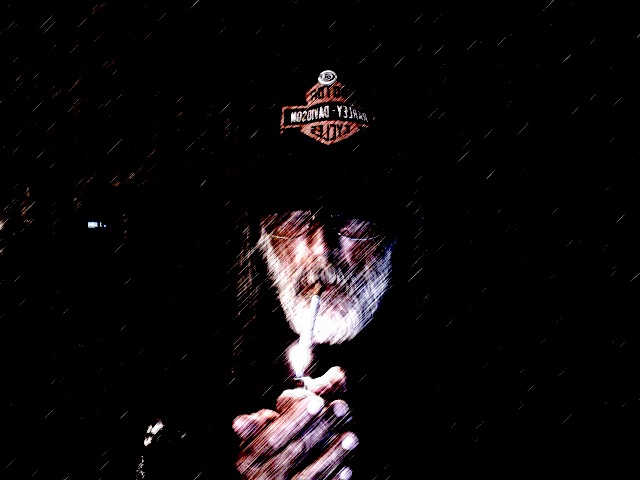
Me lighting up for you...

Saturday, September 19, 2009

(part 203) DENNIS AND GEORGE.....DUCEY AND LUCEY


Once again, I set my thoughts into believing that a deal with Dennis and his partner George could, or more precisely, would come to pass, just as I had prior to the RCA deal.

I continued to paint the house I'd been working on by day, and focused on expecting something better, and going to AA meetings at night. Whenever the doubt would creep in, I would expel it immediately and replace it with a more positive thought.

I remember what it felt like when I got word that the new deal was a go. In the twinkling of an eye my life changed again. I finished up with the house painting, and silently vowed I'd never have to do it again because of being broke.

As I walked down the driveway toward the street, and away from that job, I felt a deep sense of freedom and joy for the first time in nearly two years.

It was near the end of 1979, and I was to be paid $500 a week to write songs and make demos of them, for a minimum of one year. I was ecstatic.

"I was going to get my own place again and be able to pay the rent. I was going to have a job doing what I loved, and I was going to feel good about myself, really good," I thought.

* * *

Back in the early 60's I'd been a smiley faced ball of fire before encountering the likes of Tony Alamo, Andrew Oldham, and Randy Wood.

After finishing my work on the Chris Lucey album, Songs Of Protest And Anti Protest, for a mere $200, I understood that people in the record and music business were completely untrustworthy, and would lie about anything and everything to get what they were after.

It appeared to me, at twenty years old, that I had stepped into a world of con-men who used flattery and dishonesty as tactics to accomplish stealing from the young and naive, of which I was certainly one.

My understanding, in 1965, led me to refuse to sign an agreement with Mira/Surrey, put forth after I'd done the work on the album.

Once I'd completed my assigned task on Songs Of Protest, the so called contractual agreement was presented to me in Randy Wood's office.

In that closed door session with me, Wood, and Somer, Wood's attorney, those two men set about to persuade me to sign the Somer-penned document. It was without any other person present to protect my interests.

It was me against the two of them, and I was twenty years old. In a spur of the moment maneuver, the half inch thick contract, which I'd never seen or even heard about until that moment, was produced out of the blue and I was told to sign it.

Feeling completely out gunned, I asked what I would get if I signed it? To that, Randy Wood exploded and told me, "I just let you make an entire album at my expense, using your own songs, you little son of a bitch, and now you want more?"

I remember thinking at that moment that he had taken the situation from, Bobby Jameson had helped him out of the jam he was in with the Ducey record, and turned it around to be, he'd now done me a favor.

I was confused and uncomfortable in the confines of Wood's office, and said I'd think about it, but doubted if I would sign it. As I tried to leave, Randy grabbed me and threw up against the wall.

He began screaming in my face that I was an ungrateful little prick and that he was trying to help me, but I was too stupid to know it and was trying to fuck him.

With his hands tightly grasping the front of my shirt, and his body pinning me against the wall, I stared into his contorted face while he yelled at me. I looked over at Abe Somer, for help, but he just stood there with a smirk on his face, holding the contract in his hand.

At that moment Randy seemed to realize what he was doing and released his grip on me saying, "Go ahead, get outta here. Get outta my sight."

Shaken, but relieved, I vacated Wood's office, and remember the scene as I opened the door and looked at the larger Mira/Surrey office space.

Everybody was stone cold silent and stared at their desks, the wall, or the floor. No one said shit to me. I was just there by myself looking for a face, a gesture, something.

I looked down the length of the room to Betty Chiapetta's office door, which was open. I waited for a moment, but nothing, absolutely nothing. I left alone, and everyone knew I had refused to sign a contract for Chris Lucey. They had heard everything.

* * *

In the deal with Dennis, I set it up so I received an ongoing salary for a year. It was a way of guaranteeing that I would not only get paid for my efforts, but that it would continue for a set amount of time.

I knew, through bitter experience that what I would be paid would have to be gotten up front, or as a salary arrangement, because trying to get anything after the fact was an empty promise that I'd heard too many times before.

Wednesday, April 23, 2008

(part 58) BEHIND THE SCENES MEDDLING

As of a year ago, these pages were found for sale on eBay. They indicate things going on behind the scenes that I knew nothing about. Mira Productions (Randy Wood, Betty Chiapetta, and Abe Somer) maneuvering the situation to their own advantage. This attempt obviously put Verve Records off.

The negative outcome was seen by me at the time in Verve's reluctance to continue promoting "Color Him In" shortly after it's release. According to these documents, made known to me by Steve Stanley, there was fear on Verve's part of having to fight over Bobby Jameson as an artist with Mira Records, Randy Wood, and Betty Chiapetta's publishing and production companies.

The fact that Mira, Wood, and Chiapetta didn't own my publishing, or have me signed as an artist, was irrelevant to the damage done by this kind of meddling by Abe Somer, Randy Wood, Chiapetta, Mira Records/Publishing/Productions.


click

What is amazing about this paper (above), is that Randy Wood is telling Abe Somer an absolute lie and it is captured for all time in this document. Wood states, according to the document's signature, that Mira Productions/Publishing have me as an artist and a writer under both Bobby Jameson and as a fictitious name... Chris Lucey? Chris Ducey? Either way it is a lie.

He then goes on to say that he, Randy Wood, wants Abe Somer to get a contract, regarding me, approved by the court which is pretty interesting since I never signed one. That is a piece of paper that I would love to see.


click


This document (above) is again from Mira. Look at Dear Marcel. Just under it you can clearly see Mira Productions Inc., bleeding through from the page behind. So what I have here is a written statement by Randy Wood, telling Marcel Stellman from Decca Records UK, the label I was on in England with "All I Want Is My Baby," that MGM/Verve has a deal with Steve Clark, with me as an artist and writer. He says that he, Wood and Surrey Records, own the publishing to 14 of my songs, 10 of which were released as "Songs Of Protest And Anti Protest" by Chris Ducey, not Lucey, but Chris Ducey.

This is just a flat out lie! Anyway, it would seem obvious to me that MGM/Verve was put off by this kind of back and forth between others who had worked with me in the past.

Not until recently, did I learn of how Randy Wood, Betty Chiapetta, and Abe Somer harmed the Verve deal and "Color Him In." It was Phil Turetsky who had his office at Mira, and who was friends with Wood, Chiapetta, and Abe Somer. It was Phil Turetsky who took me from Mira to Steve Clark and Our Productions. I have no way of knowing whether Phil had any knowledge of this or not. It is sad to learn, some 40 years later, that nothing was as it appeared to be in 1966 and 1967.

Wednesday, March 12, 2008

(part 38) DUCEY/LUCEY CONTRACTS?


click
The Leaves album with my song GIRL FROM THE EAST

Because there was no contract for Chris Lucey, Mira/Surrey was left in much the same situation they'd been in with Chris Ducey's contract problems. The difference was that I, unlike Ducey, had no legal or any other representation at the time.

Randy Wood was not about to hold up the album's release and stop Surrey's move into Europe again. He and his partner, Betty Chiapetta, along with Abe Somer, decided to go ahead with the scheduled release, based on their assumption that no one would question me or Mira/Surrey about contracts back then. That of course proved to be accurate at the time and true as well for ensuing decades.

Had Mira/Surrey offered me a contract with even the slightest of benefits given to me I probably would have signed it, but in Randy Wood's mind I was due nothing. I was simply expected to roll over when asked. But I'd already played that part with Tony Alamo, Andrew Oldham, and Brit. I was unwilling to go along with Wood's and Somer's demands after completing Chris Lucey. In my mind I had saved their ass and believed they owed me much more consideration than they were offering.

Mira/Surrey was focused on their deal in Europe not on whether Bobby Jameson was treated fairly. With or without a contract they moved ahead, dismissing any problems with me as details that could be sorted out later. It was not as if anyone expected the Chris Lucey album on it's own to be a hit. It was just one of the cogs in a larger wheel.

Randy Wood was such an ego maniac that he in essence dismissed me and my rights as irrelevant to his forward motion. The fact there were never any legal agreements between me and Mira/Surrey for the Chris Lucey project was literally buried in a box that had "Who Cares!" stamped on it. Business was business in Randy's mind and no little piss-ant like Bobby Jameson was going to get in his way.

The history of Randy Wood had already been written by the time I worked for him. Long before there was any Mira/Surrey, Wood's reputation as President of Vee Jay Records had been well established along with his partner Betty Chiapetta. The addition of Abe Somer was just another black mark against the likes of Mira/Surrey's reputation of questionable ethics and business practices.

In the picture above you can see my song Girl From The East, from the Chris Lucey album, on the Mira release of The Leaves record which followed Chris Lucey. It says that Girl From The East was published by Mirwood Music another of the many companies belonging to Randy Wood and Betty Chiapetta. The songs from Chris Lucey have been moved and moved again for decades, creating an endless trail of "hide the pea."

I have never been paid a penny for Girl From The East no matter which version or record we are speaking of. Nothing! Ever!

(single releases)
Hey Joe / Girl from the East: Mira 222 (1966)

Too Many People / Girl from the East: Mira 227 (1966)

Thursday, February 28, 2008

(part 34) WRITING THE SONGS FOR CHRIS LUCEY


Randy Wood

Randy Wood and Marshall Lieb screwed around for another week or two, trying to get someone they knew to do the work on the Chris Lucey album, but came up empty. Let me clarify something here which I have noticed in reading what has been written about this subject, and is completely out of whack. Chris Lucey/Chris Ducey was not and was never intended to be a big album release.

Surrey Records was a budget line label of Mira Records. Rack Jobber stuff. That means it was always destined for metal racks in super markets and such, where you could pick up unknown records and artists for cut rate prices when you bought groceries and things. It was bottom of the barrel merchandising. The reason Randy Wood was so hung up on getting Chris Lucey released was that it was a key part of a bigger deal involving a whole line of Surrey releases in Europe.

It was the maiden voyage for his Surrey Records line and he didn't want it screwed up because of one lousy album. It was a European release date with a deadline, and the whole deal revolved around the European's fascination with the album jacket of the Chris Ducey/Chris Lucey record. It was the album's visual appearance that they wanted for display, the music was secondary. So any references to a big ad campaign regarding the release of the Chris Lucey album are completely inaccurate. The big ad campaign has already been discussed in connection with my relationship with Tony Alamo and Billboard Magazine in 1964. The two things have nothing to do with each other.

Pam Burns finally gave me the word to come back and meet with Randy again about the Lucey record. That was the first time I found out how much I would make for writing 10 new songs and recording them all. I would make either $20 or $25 a song. That was for writing and recording them. It was either $200 or $250, but I can't remember which. There was no contract and no discussion of publishing or any other rights. I would just get a couple of hundred dollars for doing the job and Randy would get off the hook. This was not an artist/writer deal whatsoever.

Randy was still leery of me because he'd never heard anything I'd done. He was going on Pam Burn's word completely and trusted her judgement. It was arranged so that each evening after the offices closed Pam and I would go upstairs and I would work on writing the songs. This started immediately! Every night I'd pick out one of Ducey's titles and work out a song that could be construed to have been written with that title in mind.

Some of them were matched pretty well, but others are a bit vague. The title and content of the lyrics I wrote sometimes seem disconnected, and that's why the album is the way it is. Not only did I have to use Ducey's titles, but I had to get it all done in less than 2 weeks. I finished 2 songs the first night and Pam said they were great. "Wait till Randy hears this, he'll be knocked out," she said. "I hope so Pam," I replied, "I really hope so."

Randy was knocked out by my songs alright, and had no problem letting me know it. I guess it was partly a sense of relief for him that Pam Burns had come through with the goods and Randy's problem was being solved. His attitude toward me improved greatly and he started treating me better. I never got too worked up about writing the songs, because I never had any doubts that I could do it. If I had had more time Chris Lucey would be a better album. What I did though was as good as I could do under the circumstances. As far as the money went I was broke. "I did it for the money!" It was not a career move. It was just a job I got. Who knew where it would end up decades later?

There are other inaccurate stories about the making of Chris Lucey that I want to clear up as well, such as references to the group "LOVE" and Arthur Lee, who I knew nothing about, nor had I ever heard when I wrote and recorded Songs Of Protest And Anti Protest. The band "Love" was known as "The Grass Roots" in 65, but had to give up that name because it belonged to another group. They changed it to "Love." Their first record was in 1966. I met Arthur Lee after I wrote and recorded Chris Lucey in 1965. If I copied someone's work I would freely admit it, but in the case of the Chris Lucey album it just doesn't apply. To this day I have heard very little of "Love's" work. Once again I leave it to the readers to decide for themselves what it is they believe. I am just telling my story.

Wednesday, February 27, 2008

(part 33) BOBBY JAMESON BECOMES CHRIS LUCEY


Original Chris Ducey album jacket 1965 Surrey Records


Chris Lucey album jacket 1965 Surrey Records

A couple of key things occurred before I ever stepped foot into Mira/Surrey Records or even met Randy Wood for the first time. The Rolling Stones had come to America and had been in LA. The reason this is relevant, is because the cover of Chris Ducey/Chris Lucey's album, "Songs Of Protest And Anti Protest" is a photograph of Brian Jones of The Stones.

They had gone to a club in West Hollywood called the "Action" for an afternoon jam session. I'd heard about it, but couldn't get in. I was outside the club in an alleyway and saw Mick Jagger with two girls, one on each arm, and had yelled to him. He'd turned and looked at me and I said "Hey Mick, it's me Bobby Jameson."

He barely acknowledged me and turned and walked away up the alley with the girls. I stood there for a moment feeling like I'd been slapped across the face and then moved on. As I said, the reason this event stands out and I mention it, is because Brian was inside the club getting his picture taken, which ended up being the cover of the Chris Lucey album. I didn't know this at the time it was happening, it's just another one of the weird details of this story that became known after the fact.

I'd also run into to Lois Johnston somewhere during that time, and she was making nice and wanted me to move back into her house in Benedict Canyon, where I'd lived before I went to England. I was surprised by this, in light of what had occurred in London, when she visited me there, but none the less, I eventually moved back in with her, something I would repeat a number of times in the future.

Randy Wood had acquired, or thought he had, an artist named Chris Ducey. They, (Mira/Surrey), had an entire album with 10 songs of Ducey's ready to go. The cover was printed, and there were thousands of them, with the titles of Ducey's songs printed on the album jackets. The album was already scheduled for a European release and part of the deal's success was strictly based on that particular album's cover, the one with Brian Jones's picture on it.

All of a sudden, they'd run into contract problems with Ducey, and he'd bowed out of the deal completely. There they were! An album cover, with no album, and 10 song titles printed on the covers, and no songs. They had to use that cover or the deal was dead and there was all the cost already involved, so they were stuck with that cover. They couldn't use Ducey's name, but it was printed on the cover.

The printer, who had done the original artwork on the jackets, figured out that he could run the already printed covers back through the presses and cancel out part of the letter D from Ducey's name and make it into an L. This is how Chris Lucey was created. Now all Randy Wood needed was someone to write 10 new songs to the existing titles, and record them all, as a brand new album. He needed that accomplished yesterday.

Randy Wood was a demanding human being, but also a resourceful one. He'd lined up Marshall Lieb, ex Teddy Bear and cohort of Phil Spector, to produce the thing, but they hadn't yet found anyone to write the songs to existing titles and record them.

Randy was also a cheap son of a bitch, which is probably why he hadn't had any success finding anyone to do the dirty work. Pam Burns, Randy's personal secretary, had repeatedly pushed Randy to give me a chance at doing it. He had been reluctant to even meet me, but was now running up against a deadline that he could no longer ignore, so he told Pam to bring me around.

I didn't know any of the details about this, until I met with Randy for the first time. I was flat broke and it was an opportunity, as far as I knew, to make a few bucks by writing songs. I said to Pam, "Let's go meet him." Randy was a black guy that looked almost white. He was well dressed all the time, and you could tell instantly that he was in charge of the entire universe, and if you questioned it, even slightly, he would straighten you out immediately. I on the other hand, was a 20 year old washed up pop star, who believed he could do anything, if given the chance.

We were a match made in hell, which I was intimately used to. He launched into the story of the Chris Ducey album and songs, and drug me over to where the album covers were. As soon as I saw the cover I said, "Hey, that looks like Brian Jones." "It is," said Randy, "We got that shot at "The Action Club" when they were here in LA. Great picture isn't it?" "Yeah," I said, "It's a real good picture. Why are you using that? I thought this guy's name was Ducey or something?" "It is," said Randy.

He showed me the two different covers, identical except for the "L" and the "D". He explained in detail what they had done and why, and what they needed now to keep the whole deal from going down the tubes and losing a lot of money. He said that I was there only because Pam Burns was relentless at promoting me to him. I said I knew that, and turned and smiled at Pam, who was quietly listening to how all this progressed.

Randy asked me again if I understood what he needed, and said that he needed it now. I told him I was clear on it, and asked him how much money I'd make for doing it. That seemed to piss him off a bit, because I'd changed the subject slightly and had assumed that I had the job, which he quickly straightened me out on. "I didn't say you could do it yet man, I don't even know if you're the right guy." "Yeah, sorry," I said, "I just wanted to know if you did let me do it, how much would I get?"

He looked at me, kind of disgusted, and then looked over at Pam, like, "Who is this guy?" We ended that particular meeting on somewhat of a sour note and I figured I blew it. As I left with Pam I told her I was sorry for screwing it up and thanked her for trying so hard. "What, are you kidding? You'll get it, don't worry." "Yeah, but..." "Don't worry," said Pam. "You got it, at least you got the opportunity. Just write him a couple of songs and if you do that the way I know you can, you got it." "How do you know?" I asked. "Because I know Randy, and because you're all he's got, and he's running out of time."


Early demo 1965 World War 3

Sunday, February 24, 2008

(part 31) CHRIS DUCEY BECOMES CHRIS LUCEY ?


Sunset Blvd. and Clark 1965

There was a new feeling in the air. It was different from when I had been in LA in 64. It was partly due to the wave of British bands sweeping across America, but there was something else, something completely new about the atmosphere around the Sunset Strip and West Hollywood.

I began to notice that people were more open and friendly than they had been in 64. There seemed to be a genuine interest and level of acceptance between people on the street who were strangers. Instead of just ignoring each other, they actually were taking time to stop and communicate. Petty differences seemed obsolete, while curiosity in and about others, seemed to be taking the lead.

You could quite literally walk outside, not knowing anyone, walk from Sunset and La Cienega to Sunset and Clark, where the Whiskey A Go Go was, and have a whole new set of friends. Really! It was a trip! And words like trip, groovy, right on, it's boss, far out, etc., were all being born out of this new sense of community. It was happening in a lot of places all over the country, but it would be a while before everyone knew how powerful and wide spread this social movement really was.

The world was being changed, right before my eyes. LSD was something I started hearing about as soon as I got out on the streets. Rumor was that you could find God on this stuff and alter your consciousness for the better. Almost immediately, I forgot about my losses and began to assemble a new personality, mixing the British pop scene, where I had just been, with newer elements of the psychedelic world springing up around me.

Color and design began popping up everywhere. Peace signs were a new and powerful reminder to people, that a war was going on, and the country was taking sides for and against it. "Make Love Not War" was one of the best slogans I have ever heard in my life, and was something 10's of thousands of young and not so young people practiced religiously, myself included.

A new phenomenon called "Hippies" began appearing everywhere. Young people, who thought dancing to good music, smoking weed, and making love, far out classed the typical get a haircut, a job, and join the army generation. These two factors would eventually clash violently, on Sunset Blvd., in and around Pandora's Box and The Fifth Estate, which were roughly located at Sunset and Crescent Heights Blvd., about a year or so later.

Everywhere I went, people were talking about music and new groups that sprung up like flowers out of the pavement. You could get some people together and just make a tape and walk in to countless record labels in Hollywood and get the damn thing released as a record. It was fantastic! Up at the Whiskey A Go Go, Johnny Rivers was doing live afternoon shows and killing em.

This would soon give way to bands like The Byrds. But I don't want to lose sight of my own story here, because just before this new wave of bands came ploughing through LA, there was a transition period. In between Johnny Rivers and The Byrds, I had begun to meet a lot of people, and one of those was a girl named Pam Burns. I don't recall how exactly we met, we just met. That was the way of it then, you just ran into people everywhere and got to know each other, it happened all the time.

Pam worked at Mira Records, a company that was started by Randy Wood, who at one time had been president of Vee Jay Records. He had offices on Sunset Blvd, west of the Whiskey and Pam was one of his personal secretaries. Pam liked me a lot and learned about my past quickly. She remembered the Billboard ads and asked me where I'd disappeared to. I told her the story and she couldn't understand how someone like me had just come along and then just vanished more or less.

I told her that I didn't know either, but that's what had happened and here I was with not a goddamn thing to show for it and no work. I played a lot of songs for her, so she knew I could write and sing and wasn't just some over hyped no talent ass hole. She said she wanted to talk to Randy Wood about me and see if she could get him to give me a shot at working on this project of his, that had run into contractual problems with an artist he'd recorded an album with named Chris Ducey. I told her thanks and to let me know if anything came up.